
The Real Greek Salad made in 5 minutes – Horiatiki
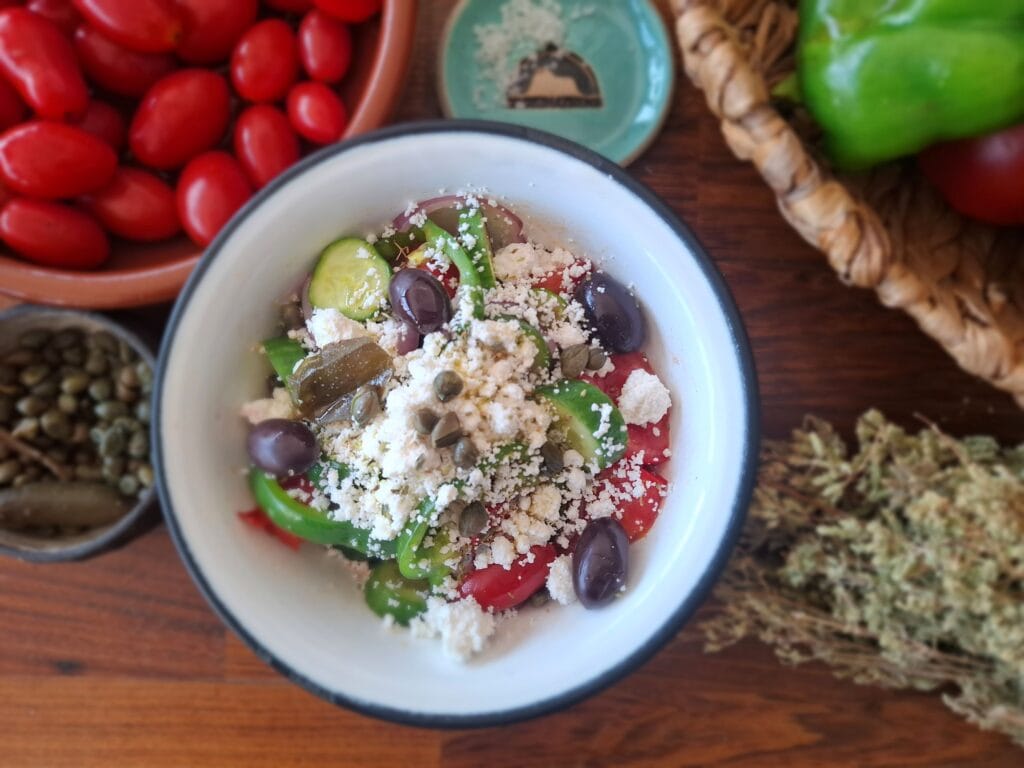
If there’s one dish that captures the heart of Greek summer, it’s the Greek salad, or horiatiki as we call it in Greece. Simple, colorful, and full of pure Mediterranean flavor, this salad brings together the very best of our land — ripe tomatoes, crisp cucumbers, sweet red onions, green peppers, salty olives and capers, and fragrant oregano, all drizzled with golden Greek extra virgin olive oil.
It’s the salad you’ll find on every taverna table by the sea and in every home across Greece. Each region adds its own little twist — capers from the islands, rusks from Crete, or even xinomizithra instead of feta. But no matter where you are, horiatiki is always a celebration of freshness and simplicity. If you want to taste more vegetarian Greek dishes have a look at our recipes here .
And then, there’s the great debate: to add vinegar or not? Some Greeks swear by a small splash of red or white wine vinegar for brightness, while others insist that the natural juices of ripe tomatoes are all the dressing you’ll ever need. The truth? It’s a matter of taste — just don’t overdo it.

Tips for the best Greek Salad
- No lettuce, ever. Traditional Greek salad has only tomato, cucumber, onion, pepper, olives, feta.
- Use ripe, juicy tomatoes — they release the natural “dressing.”
- Keep vegetables chunky — χωριάτικη = rustic.
- Use real Greek extra virgin olive oil (generously!).
- Add the feta as a slab on top — not cubed — for authentic presentation.
- Oregano is key — dried Greek oregano only.
- Feta vs. Xinomizithra: Xinomizithra gives a lighter, creamier touch; feta adds more saltiness and structure.
- Extra flavor: Add a few leaves of fresh oregano or add some Rock Samphire.
- The vinegar debate: Try both ways and see which side you’re on — team pure tomato and olive oil juice or team vinegar kick.
Storage & Make-Ahead
- Greek salad is best fresh. The vegetables soften quickly.
- If you must prep ahead:
- Chop vegetables and keep them separate.
- Add salt, oil, and vinegar only before serving.
- Leftovers: Eat within 12 hours — they turn into a marinated veggie mix but still tasty.
- Feta: Keep separately if storing; otherwise it dissolves into the juices.

Frequently Asked Questions
Is Greek salad supposed to have lettuce? No. Traditional horiatiki never includes lettuce — that’s an American variation.
What kind of feta should I use?
Use PDO Greek feta, preferably made from sheep’s milk or sheep + goat blend. It’s creamier and tangier.
Which olives are traditional?
Kalamata olives — whole, with the pit if possible.
What is the dressing for Greek salad?
There is no separate dressing — just olive oil, salt, oregano, and , optionally, a splash of vinegar.
PrintGreek salad

- Prep Time: 5
- Total Time: 5 minutes
Ingredients
- 2 large vine tomatoes, cut into wedges
- 1 cucumber, roughly sliced
- 1/2 red onion, thinly sliced
- 1 small green bell pepper, thinly sliced
- 2 tbsp Kalamata olives
- 1 tbsp capers
- 1 tsp dried oregano
- 1 tsp dried thyme
- 4 tbsp extra virgin olive oil
- Salt, to taste
- 100 g xinomizithra or feta cheese
- Optional: a small splash of red wine vinegar (for the vinegar enthusiasts!)
Instructions
- Place the tomatoes, cucumbers, peppers and onions in a bowl
- Add the olives and the capers
- Sprinkle with oregano, thyme and add the salt
- Add the EVOO and vinegar if you decide to use it
- Toss gently to combine, making sure everything is coated with olive oil.
- Transfer to a serving bowl and top with the cheese.
- Finish with a drizzle of olive oil.