
Best Greek Tsoureki Recipe (Soft, Fluffy & Aromatic Easter Bread)
Every Holy Thursday, my grandmother’s kitchen would turn into complete chaos, but in the good kind. Trays going in and out of the oven, filled with tsoureki and koulourakia, and the whole house smelling like butter, mahlepi, and orange. She used to knead everything in a large clay bowl, the kind every Greek grandmother seemed to own, while I hovered around the kitchen, waiting for the first tsoureki to come out of the oven. Sometimes I helped shape them, sometimes I just… sampled.
Today I’m sharing the traditional version (technically Constantinopolitan-style), along with the small details that actually make the difference. Follow these, and your tsoureki will come out soft, fluffy, and properly fragrant , not dry, not heavy, not disappointing.
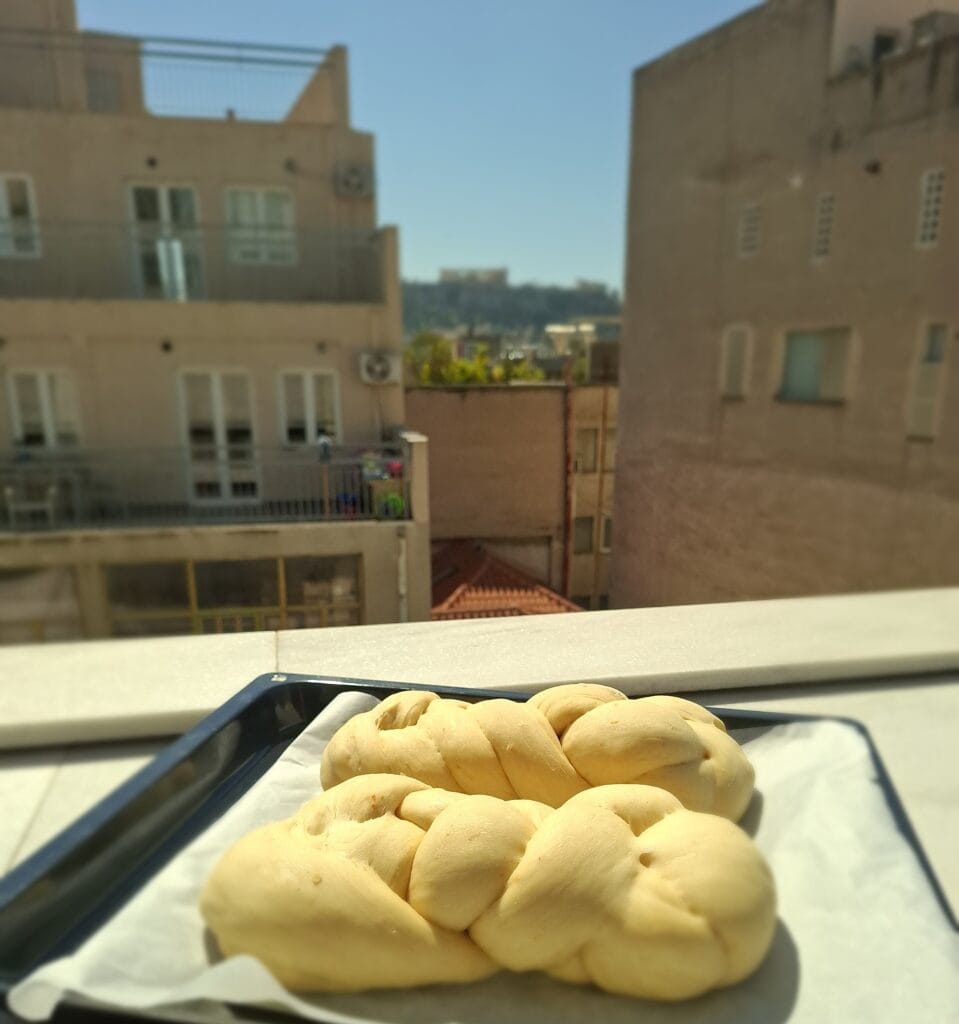
Tips for perfect tsoureki
- Temperature matters more than you think
The water for the yeast and the milk-butter mixture should be warm, not hot. If it’s too hot, you kill the yeast , and nothing rises no matter how much you try. - Don’t panic if the dough is sticky
It should be. Resist the urge to dump more flour in. After proofing, it will be much easier to handle. - Knead properly
This is not optional. About 10 minutes is what gives tsoureki its signature stringy texture. - Don’t overbake
Dry tsoureki is a tragedy. You want a soft, slightly elastic crumb. - Warm environment = good rise
If your kitchen is cold, let the dough rise in the oven (temperature as low as it gets).
Q&A
Why didn’t my tsoureki rise?
Most likely the yeast was inactive or the liquids were too hot.
Can I skip the mastiha?
Yes, but you’ll lose part of the traditional aroma. Orange zest is a good fallback however.
Why did it turn out dense?
Too much flour or not enough kneading.
How long does it keep?
3-4 days covered at room temperature. After that, it starts drying out (or disappears, realistically).
How to serve
- Fresh, slightly warm, straight from the oven
- The next day with a bit of butter
- Or, not traditional, but very right, with chocolate spread
Perfect with coffee, especially for a slow breakfast.
PrintTraditional Greek Tsoureki (Aromatic Easter Brioche)

Soft, fluffy and aromatic Greek tsoureki made with traditional flavors like mahlepi and mastiha. This classic Easter brioche has a light, stringy texture and a rich buttery taste — perfect for breakfast or with coffee.
- Prep Time: 30
- 3 hours to rise:
- Cook Time: 30
- Total Time: 1 hour
Ingredients
- 100 g warm water
- 2 sachets dry yeast (about 15 g)
- 1 tbsp sugar
- 70 g butter
- 100 g milk
- 160 g sugar
- 3 eggs (room temperature)
- 1 tsp mahlepi
- 1/2 tsp mastiha or zest of 1 orange
- 600 g strong bread flour (± a little if needed)
For the glaze
- 1 egg + 1 tbsp water
- Flaked or chopped almonds
Instructions
- In a bowl, mix the warm water, sugar, and yeast. Let it sit for 5–10 minutes until slightly foamy.
- In a saucepan, gently heat the milk, sugar, butter, and mahlepi until the butter melts. Let it cool to warm (not hot).
- In your mixer bowl, combine the milk mixture, eggs, and mastiha. Mix.
- Add the yeast mixture, then gradually add the flour while kneading with the dough hook.
- Knead for about 10 minutes until the dough starts pulling away from the sides. It will be soft and slightly sticky.
- Transfer to a lightly oiled bowl, cover, and let it rise in a warm place until doubled in size (2–3 hours).
- Divide the dough into two portions, shape into braids (or any shape you like), and place on a baking tray. Add a red egg if you want the traditional look.
- Cover again and let them rise for another 30–40 minutes.
- Preheat the oven to 170°C. Brush with the egg wash and sprinkle with almonds.
- Bake for about 25–30 minutes until golden brown.
- Let cool on a rack before slicing (if you can wait).
Notes
- Make sure all liquids are warm, not hot, to properly activate the yeast.
- The dough should be soft and slightly sticky — avoid adding too much extra flour.
- Proper kneading (about 10 minutes) is key for the characteristic stringy texture.
- Let the dough rise in a warm, draft-free environment for best results.
- Baking time may vary slightly depending on your oven — remove once golden brown to avoid drying out.