Greek Saganaki Cheese – Quick, Golden & Addictively Delicious
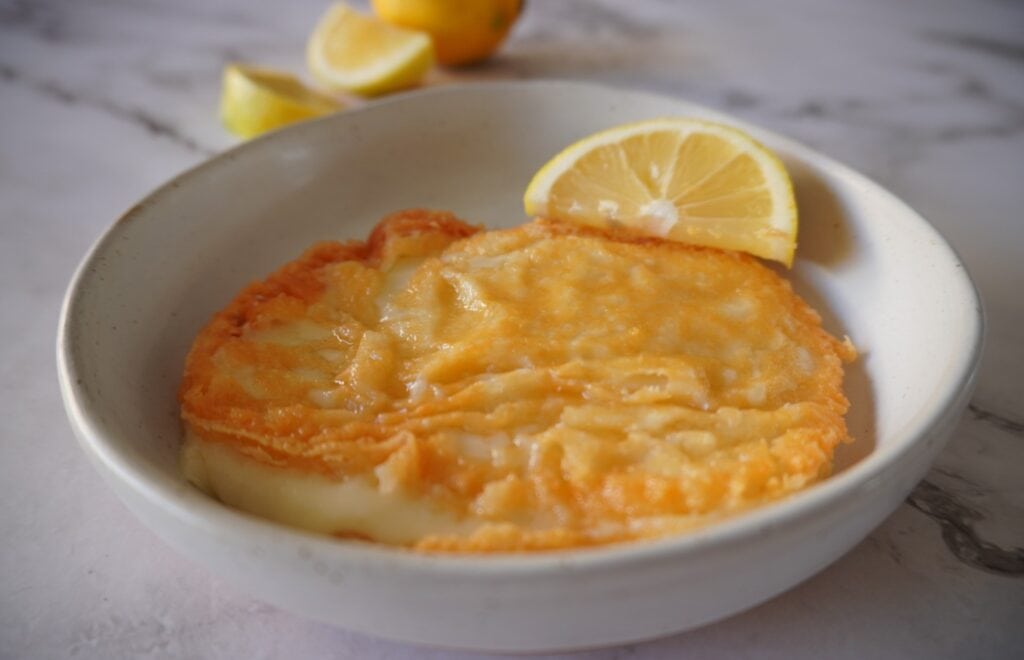
When done properly, Greek saganaki cheese is one of my absolute favorite Greek appetizers. Imagine a piece of salty, flavorful cheese, fried in a light golden crust and served sizzling with a splash of lemon juice — simple, irresistible, and ready in minutes.
Unfortunately, this easy and delicious meze is often mistreated — both abroad and in Greece. In the U.S., saganaki is often served flambéed (the famous “Opa!” version), which is definitely a no-no in Greek kitchens. In Greece, on the other hand, it’s often made with poor-quality cheese, which ruins the balance of flavor and texture.
Done right, though, saganaki is pure magic — crispy outside, soft inside, perfectly salty and tangy.
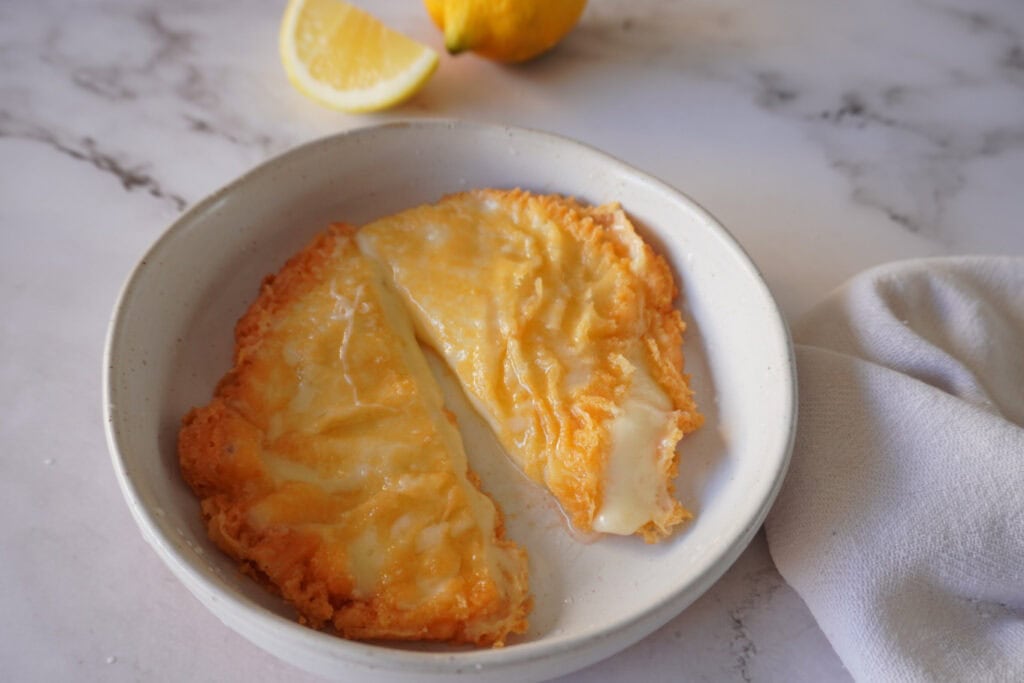
The word saganaki comes from sagani, the small two-handled frying pan traditionally used to prepare this dish. It’s one of the classic Greek taverna starters, often brought to the table still sizzling, ready to share.
There are many versions across Greece — with cheese, shrimp, or mussels — but the cheese saganaki remains the most famous. It’s the kind of appetizer that always disappears first from the table.
Tips for the Perfect Saganaki
- Choose good cheese. In Greece we use kefalotyri or kefalograviera — flavorful cheeses that don’t melt too much. If you can’t find them, use pecorino, provolone, or Monterey Jack.
- The cheese should be about 1.5 cm thick — too thin and it melts too fast, too thick and it won’t heat through.
- Wet the cheese briefly under running water before dredging — this helps the flour stick evenly.
- Experiment with flavor: mix sesame seeds or nigella seeds into the flour and drizzle with honey after frying for a gourmet twist.
- Use a heavy-bottomed pan (ideally cast iron or stainless steel) to keep the temperature steady.
- The oil should be hot but not smoking — about 180°C (350°F). Test with a pinch of flour; it should sizzle immediately.
- Always serve it immediately while it’s still sizzling.
- If you have leftovers (rarely happens!), they make an amazing vegetarian souvlaki — just swap the meat for saganaki cubes.
Storage
- Uncooked cheese:
Store wrapped in the refrigerator until the expiration date. - Floured (uncooked) saganaki:
Can be prepared in advance and kept refrigerated for up to 24 hours, well covered. - Cooked saganaki:
Best eaten immediately.
If you must store leftovers (rare situation), refrigerate for up to 1 day and reheat in a pan or air fryer.
Microwave reheating is strongly discouraged. Wrapped in pita bread with tzatziki and fresh tomatoes, it also makes a great souvlaki.
Saganaki – Q&A
What is the best cheese for saganaki?
Kefalotyri and graviera are the classics. You want a firm, well-aged Greek cheese that softens without melting into a puddle. If you can’t find them, use pecorino, provolone, or Monterey Jack. If it behaves like toast cheese, it’s not saganaki material.
Can I bake saganaki instead of frying it?
You can, but let’s be honest: it won’t be the same. Baking or air-frying gives a lighter result with less crunch. Traditional saganaki is unapologetically fried.
Why does my saganaki melt and fall apart?
Either the cheese is wrong, or the oil isn’t hot enough. Saganaki needs high heat and confidence. Lukewarm oil is sabotage.
Do I need egg for the coating?
No. Just flour. Egg makes it heavy and unnecessary. This is not schnitzel.
Can I make saganaki without flour?
Yes, but you’ll lose the crispy crust. You can pan-sear the cheese plain, but then we’re drifting away from tradition. Proceed quietly.
Saganaki

Crispy Greek saganaki with a golden crust and soft, melty center.
- Prep Time: 5
- Cook Time: 5
- Total Time: 10 minutes
- Yield: 4 1x
- Category: Appetizer
- Method: Frying
- Cuisine: Greek
Ingredients
- 200 g kefalograviera (or kefalotyri. Monterey Jack, provolone, Pecorino ).
- 30 g plain flour, for dredging
- oil for frying
- 1/2 lemon, for serving
Instructions
- Cut the cheese into slices about 10 × 7 cm and 1.5 cm thick.
- Rinse the cheese briefly under running water, then dredge in flour, shaking off any excess.
- Heat a few tablespoons of oil in a small heavy-bottomed pan over medium-high heat.
- When the oil is hot, add the cheese and fry for a few minutes on each side, until golden brown and crisp.
- Remove from the pan and place on paper towels to absorb any excess oil.
- Serve immediately, with a generous squeeze of lemon juice.