Traditional Greek Spanakopita: Learn How to Make it with Phyllo from Scratch
Maybe the second most famous Greek dish — after moussaka, of course — is spanakopita. So today you are going to learn how to make traditional Greek Spanakopita from scratch. The word “Spanakopita” comes from spanaki (spinach) and pita (pie), so literally Spanakopita is a “spinach pie.” But spanakopita is much more than spinach wrapped in pastry — it’s a vibrant, herby, cheesy pie that tastes like spring in every bite.
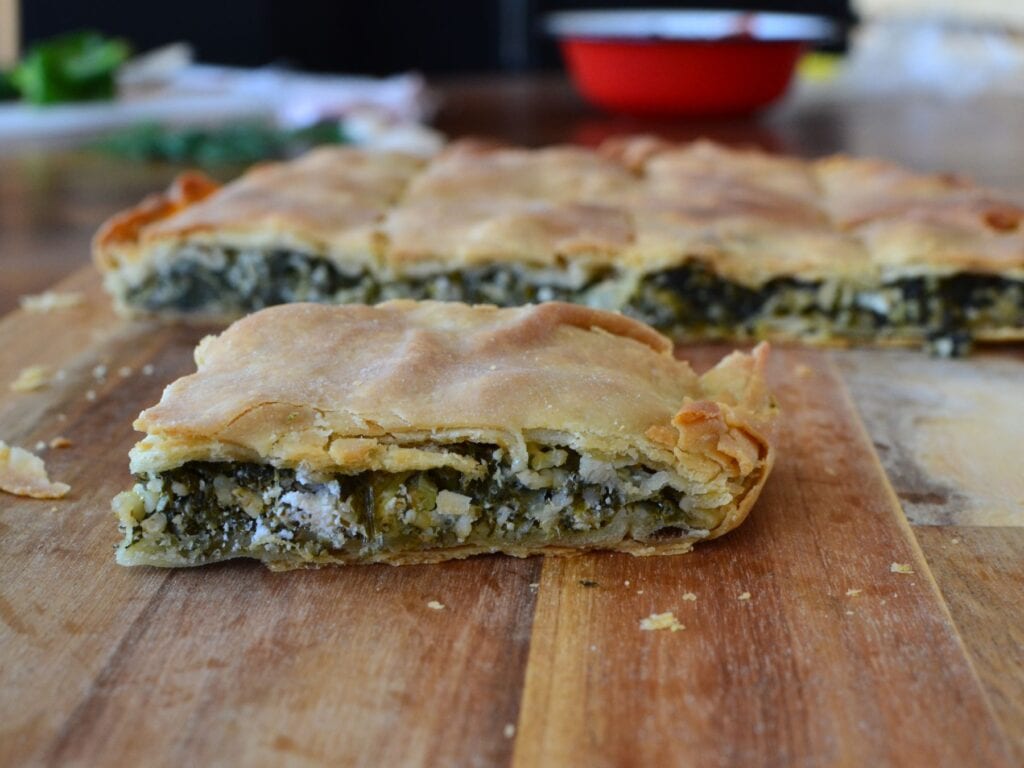
I like to balance the slight bitterness of spinach with the sweetness of leeks, add lots of fresh herbs (parsley, dill, spearmint, fennell), and use both red and green onions for depth. As for cheese, although you can use feta, I personally prefer manouri — creamier, milder, and far less salty, giving the pie a luxurious texture. If you enjoy Greek vegetable pies and classic meatless dishes, explore all our vegetarian Greek recipes here .
Spanakopita is one of Greece’s most iconic dishes, found in every bakery, home, and taverna.
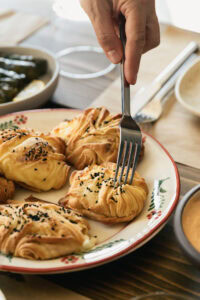
It can be made as a large pie or in individual triangle pastries (spanakopitakia), served warm or at room temperature. Traditionally, families make it with hand-rolled phyllo, olive oil, and greens from the garden — a true expression of Greek home cooking.
It’s often served during Lent (without cheese or eggs) or enjoyed year-round as a light lunch, appetizer, or picnic food.
Tips
- Use fresh spinach (or a mix of greens): Spinach + leek + dill = the classic Greek flavor.
- To remove moisture from spinach, salt it and let it sit in a strainer for at least 30 minutes, then squeeze gently by hand. This step keeps the filling dry and prevents a soggy pie.
- Don’t add any salt: Feta and hard cheeses already have plenty of salt.
- Don’t press down the filling: Leave it fluffy so the pie bakes light and airy.
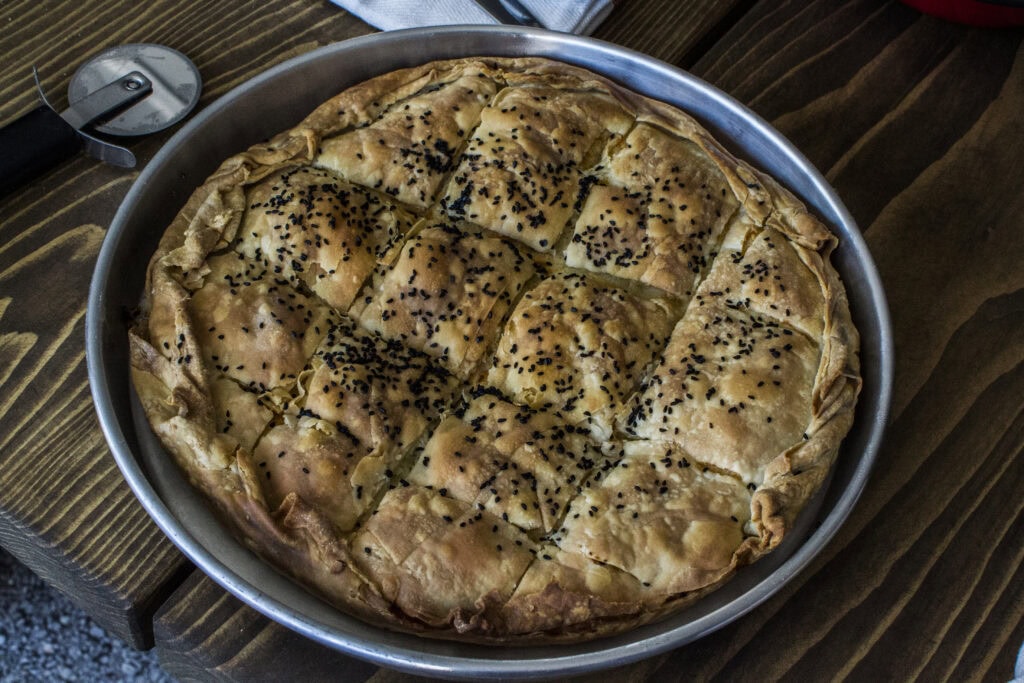
- Score the top before baking: Helps steam escape and keeps the sheets crisp.
- Fresh spinach has better flavor and texture than frozen. If using frozen though, thaw and squeeze it thoroughly to remove all water.
- A little bulgur, rice, semolina, or breadcrumbs in the filling helps absorb extra moisture.
- Use a simple aluminum pizza pan to bake it — it cools fast and prevents sogginess.
- For an extra crispy crust, preheat a baking sheet in the oven and place the pan on top.
- Always brush each phyllo sheet generously with olive oil — this creates the flaky, golden layers.
- Homemade phyllo is crunchier and more flavorful, but store-bought works beautifully for a quicker version.
- Let the pie rest for 15 minutes after baking before cutting; this helps it set and stay crisp.
Storage
- Fridge: Keeps well in an airtight container for 3–4 days. Reheat in the oven to crisp it up again.
- Freezer: Spanakopita freezes perfectly.
- You can freeze it: Unbaked, fully assembled → bake from frozen (+10–15 minutes).
- Baked, cooled and cut → reheat at 180°C until crisp.
- Meal prep tip: Make two pies and freeze one — it bakes like fresh.
FAQ
Why does my spanakopita turn soggy? Too much moisture in the greens. Cook until all liquid evaporates and let the filling cool.
Can I use puff pastry instead of phyllo? Yes, it is still delicious. Faster and kid-friendly.
Can I make spanakopita vegan? Yes — replace cheese with vegan feta or just omit it.
Which cheeses work best? Classic combo: feta + hard Greek cheese (kefalotyri, graviera, kefalograviera). You can also use mild cheddar if you’re outside Greece.
Should spanakopita be eaten hot or cold? Both. It’s amazing warm but even better at room temperature the next day.
PrintSpanakopita
Authentic traditionl Greek spanakopita made with fresh spinach, herbs and crispy phyllo.
Ingredients
a. The phyllo
- 180 g all-purpose floor
- 3 tsp EVOO
- 1,5 tsp vinegar
- 80 ml water
- 1 tsp salt
b. the filling
- 300 g fresh spinach washed, drained and chopped
- 100 g feta or manouri cheese
- 1 onion, grated
- 2 spring onions, finely chopped
- 1 big leek, finely chopped
- 2 tbsp dill finely chopped
- 2 tbsp parsley, finely chopped
- 1 tbsp spearmint, finely chopped
- 2 tbsp bulgur (or semolina or rice)
- 3 tbsp EVOO plus more for brushing
- Salt and pepper to taste
Instructions
- Prepare the dough. Place the flour and salt in a large mixing bowl. Use your hand or a whisk to combine them evenly. Make a well in the center — this will hold your wet ingredients and make it easier to bring the dough together later.
- Pour the vinegar and olive oil into the well. Then, start adding about 50 ml of water, a little at a time.
- Begin mixing the ingredients using your hand, drawing flour from the sides of the bowl into the wet center. You’ll start to see the dough forming small clumps.
- Keep mixing until the dough starts to come together.
- If it looks dry or crumbly, add a few drops of water at a time — don’t rush! Mix and check the texture before adding more. If the dough becomes too sticky, sprinkle in a little more flour (about ½ teaspoon at a time) and knead again.
- The goal is a dough that feels soft, smooth, and elastic, like play-doh. The exact amount of water you’ll need depends on several factors — the brand of flour, air humidity, and room temperature — so don’t worry if you need slightly more or less water than the recipe suggests.
- Once the dough has come together, transfer it to a clean surface.
- Now comes my favorite part — kneading. Treat the dough like a stress ball. Squeeze it, press it, fold it — gently but with purpose. You’re not fighting it; you’re helping it relax. Use the heel of your hand to push the dough away from you, then fold it back, give it a quarter turn, and repeat. Keep going for about 5 minutes. You’ll notice it change under your hands — from rough and sticky to soft, smooth, and a little springy. That’s your cue to stop.
- Once your dough feels perfect, shape it into a ball. Cut it into 5 equal pieces and lightly brush each one with a touch of olive oil to prevent drying.
- Cover with plastic wrap or a clean towel and – if possible – let it rest for 30 minutes at room temperature. This rest helps the gluten to make the dough much easier to roll
- Prepare the filling. Place the chopped spinach in a strainer, salt generously, and let it sit for at least 10 minutes. Squeeze out as much liquid as possible.
- Add the leeks and squeeze again for 2-3 minutes.
- Add the spinach and leeks in a large bowl, mix tand add the onions, spring onions, herbs, bulgur, and pepper (no salt is needed since we have salted the spinach). Add the cheese – crumbled – and the olive oil. Stir until well combined.
- Roll out the dough. Prepare your workspace. Lightly flour your counter. Keep extra flour nearby. Take one dough ball and flatten it first into a small disc (around 10 cm). Sprinkle both sides of the disc with flour.
- Roll it out. Start rolling from the center outward, rotating the dough as you go. When it gets wider, sprinkle with flour, wrap one edge around the pin and roll it forward and backward to stretch. Unroll, rotate, dust lightly, repeat.
- Continue until it’s paper-thin and almost transparent — you should just see your hand through it.
- Use the sheets immediately or stack them with a dusting of flour between each and a towel on top to keep them from drying out.
- Assemble. Layer three sheets of phyllo in the pan, brushing each one with olive oil.
- Spread the filling evenly over the third sheet.
- Cover with the remaining two phyllo sheets, brushing each with olive oil.
- Roll up the overhanging edges to form a rim and score the top lightly with a sharp knife.
- Brush the top generously with olive oil and precut in pieces
- Bake the spanakopita. Place the pan on the hot baking sheet and bake for 40 minutes, or until the crust is golden and crisp.
- Rest before serving — let the pie sit for about 10–15 minutes before cutting.