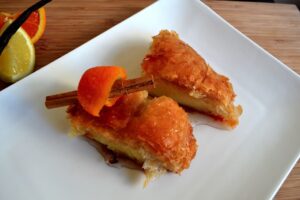
Greek Portokalopita (Greek Orange Phyllo Cake)
I always tell you the truth — and today is no exception: I hate portokalopita. I don’t get the hype, I don’t understand why people love it, and honestly, I could live a full and happy life without ever eating a slice again. But tastes differ, and who am I to tell you what to enjoy?
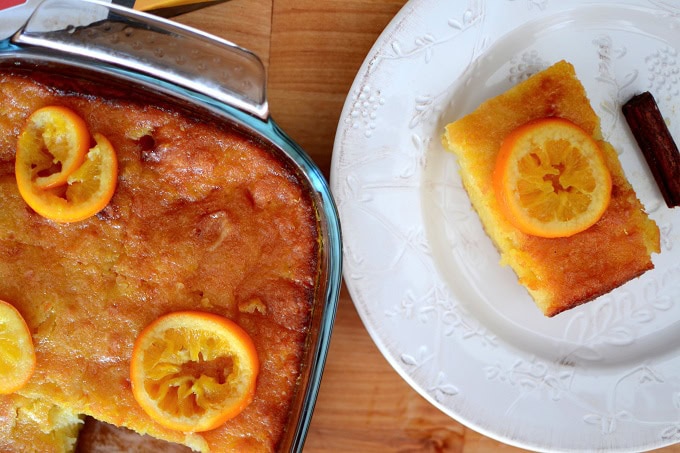
So when people asked me to make a portokalopita, I spent days researching recipes, flipping through old notebooks, comparing techniques, and — using the very scientific method of copy-paste from everything I liked — I created the recipe below.
Can I tell you if it turned out good? Absolutely not. Can I tell you that the house smelled incredible and everyone who tasted it loved it? Yes. That part I can confirm.
Portokalopita belongs to the family of siropiasta — Greek syrup-soaked desserts made with phyllo like baklava or galaktoboureko. Unlike traditional sponge cakes, this dessert uses dried, crumbled phyllo instead of flour, giving it that signature texture. It’s believed to have originated in Central Greece, where oranges grow abundantly, and quickly became a staple in tavernas after Sunday lunch.
Tips for Perfect Portokalopita
- Dry the phyllo properly — this is the secret. Let it air-dry or bake briefly until crisp before crumbling.
- Don’t overmix the batter — gentle folding keeps the texture light.
- Use real oranges — fresh zest and juice make a huge difference in aroma.
- Pour cold syrup over hot cake — or the opposite. Never hot-on-hot; it turns mushy.
- Let it rest before slicing — portokalopita needs time to absorb the syrup fully.
- Use neutral oil — olive oil is too strong; sunflower or mild vegetable oil gives the best result.
- You can also make it in small muffins. In that case you bake it for just 20 minutes
Storage & Make-Ahead
- Room temperature: Keeps for 2–3 days covered (it stays soft and fragrant).
- Fridge: Up to 5 days.
- Freezer: Yes — freeze slices for up to 2 months.
- Reheat: Warm briefly in a low oven to revive aroma and texture.
- Make ahead: Portokalopita tastes even better the next day as the syrup settles.
FAQ
Why is my portokalopita soggy?
Either the phyllo wasn’t dried enough, or the syrup/cake temperature ratio was wrong (hot-on-hot).
Can I use ready-made orange syrup?
Yes, but fresh homemade syrup brings out the classic Greek flavor.
Why did my cake not rise?
Overmixed batter or expired baking powder. Fold the mixture gently and avoid vigorous stirring.
Can I use olive oil instead of vegetable oil?
You can, but the flavor becomes stronger and less dessert-like. Mild oils work best.
Can I make portokalopita without yogurt?
Yes — replace it with equal amount of milk
PrintGreek Portokalopita (Greek Orange Phyllo Cake)
Authentic Greek portokalopita — a fragrant orange phyllo cake soaked in syrup. Easy, moist and delicious.
Ingredients
Phyllo & Batter
- 350 g phyllo pastry (about 3/4 of a 500 g pack)
- 130 g sugar
- 130 ml vegetable oil or half oil and half melted butter
- 150 g strained Greek yogurt
- 3 large eggs
- zest of 2 oranges
- 80 ml fresh orange juice
- 1 tsp baking powder
Syrup
- 400 g sugar
- 500 ml water
- 120 ml fresh orange juice
- Peel of 1 orange, in wide strips
- 1 cinnamon stick
Instructions
- Make the syrup by boiling sugar, water, orange juice, orange peel, and cinnamon for 7–8 minutes.
- Let it cool completely.
- Prepare the phyllo. Tear the phyllo sheets by hand into small pieces.
- Spread them on trays to dry for 10–15 minutes or bake at 100°C (210°F) for 5–7 minutes until crisp but not browned.
- Prepare the batter. In a bowl, whisk the eggs and sugar until pale and fluffy.
- Add the yogurt, oil, orange zest, orange juice, and baking powder and mix until smooth.
- Add the dried, crumbled phyllo in batches, stirring to incorporate evenly.
- Pour the batter into a greased baking dish and bake at 180°C (350°F) for about 50 minutes, until the top is golden and the center is set.
- Remove the cake from the oven and immediately pour the cold syrup over the hot cake.
- Let it rest for at least 15 minutes before serving to allow the syrup to absorb.